Could Melaleuca alternifolia oil offer a viable adjunctive therapy for conditions such as acne vulgaris or tinea pedis?
Tea tree oil, derived from the Australian Melaleuca alternifolia tree, is a prominent natural agent frequently incorporated into dermatological and trichological formulations. Its historical application spans centuries, primarily attributed to its purported antibacterial and antifungal properties. This article critically examines the scientific evidence supporting its efficacy in managing common dermatological conditions like acne, athlete's foot, and onychomycosis.
Composition and Mechanism of Action of Tea Tree Oil
Tea tree oil is a complex essential oil comprising over 100 distinct compounds, conferring its potential antibacterial, antifungal, and anti-inflammatory attributes. These inherent properties underscore its widespread use in skincare, haircare, and various home remedies.
Commercially, tea tree oil is available as a pure essential oil (100%) or in diluted concentrations ranging from 5% to 15% as an active ingredient in topical preparations such as creams, gels, and cleansers. Research indicates that its mechanism of action involves compromising bacterial and fungal cell walls, thereby disrupting their growth and replication cycles. While in vitro and preliminary human studies suggest significant antimicrobial, antifungal, and anti-inflammatory effects, further rigorous human-based research is imperative to fully elucidate its clinical benefits and safety profile.

As planned—and as I mentioned in my previous post—we made our way to Edinburgh Castle today. As expected, on arrival, it was raining; we checked the weather forecast. But well, it is Scotland. We got wet, my partner and I, and of course our Historic Scotland card decided not to work. Thankfully, since the card had already been sent and we were physically at the location, they let us in. They did say we’d need a new card, and all of that admin talk—but we were just glad to be allowed through the gates.
We’d come with high expectations. I say that because most times when I’ve seen the castle, it’s been from the outside. And let’s be honest, the view from both the front and the back is stunning. I’ve always wanted to go inside, just to finally kill the curiosity.
But once inside... well, let’s say it didn’t quite meet the hopes we brought along.
Now, I don't think my partner would say it’s the best of all the castles we’ve visited in Scotland. Dunbarton Castle, for instance, has high climbs and open structures—it felt more adventurous, more layered. Edinburgh Castle, in comparison, felt more like a walk inside a large compound. The views were still impressive—especially of the city—but the castle interior itself didn't quite offer the kind of room-by-room exploration we were hoping for.
It was raining, the small museum spaces were packed, and though there were interesting exhibits about Scotland’s military history, they were hard to enjoy properly. You couldn’t linger or read anything easily because of the crowd. There was one truly beautiful building that looked like a church—it caught my eye—but it wasn’t open to the public. And yes, the views from the edges were breathtaking, but still, we were left wanting something more.
I’ll admit it—I had a bit of a childlike expectation. I thought we’d be exploring old rooms, learning how the castle was built, and walking through hidden corners. But it was mostly about walking outdoors, while trying to stay dry and dodge crowds. My partner kept a good attitude, but I must have looked rather funny—wet, wide-eyed, and clearly underwhelmed.
We didn’t take many photos, partly because the energy dipped. It felt like being promised a playground and then arriving to find only grownups walking around with maps. You’d have laughed if you’d seen my face.
Now, were we disappointed? I wouldn’t say that exactly. I’d say we just brought too much expectation.
Edinburgh Castle is the most talked about, the most visited—so of course we imagined it would be packed with wonder at every corner. But in all honesty, I preferred Dunbarton Castle. And mind you, it was also raining when we visited Dunbarton, but we didn’t mind—it felt worth it because we were exploring inside the actual structure.
The prison area in Edinburgh Castle was interesting, I’ll give it that. But it was crowded, and that sort of close-quarters atmosphere, especially in the rain, isn’t for me. Crowds, wet clothing, and confined spaces don’t exactly mix well—especially in these times when you can’t help but think about germs flying around.
Still, standing outside the castle, looking up at it—that view is something else. Beautiful, dramatic, iconic. I understand why it draws the crowds. But for us, seeing it from the outside may have been more memorable than going in.
Scotland has many castles worth exploring—some less known but just as rich in character. So, now you know how our day at Edinburgh Castle went; let me tell you about the historic aspect.

For my birthday outfit, I wore a beautiful yellow dress, but you know what? I changed into a black outfit before we entered the boat to Loch Leven Castle. If there’s one thing I really look good in, it’s yellow—I mean, you all told me, and I appreciate your words.
As part of my birthday wish list was to spend most of my time in nature, we also went to two more castles the next day. One I have shared with you is Newark Castle, and the other one I have not shared on the blog yet, but the name is Bothwell Castle. And guess what? My partner already made reservations—we are finally visiting the most visited castle and the most talked-about city in Scotland: Edinburgh Castle.

I have been to Edinburgh several times, but you know what? I’ve taken photos in front of the castle, but I have never entered it. I mean, look at me—I was like, “£22 just to enter a castle?” But I give it to them—even the view in front of the castle is amazing. But now that we are members of histroc scotland walla we get to enter for free isnt that lovely? yes it is.
My partner and I have decided to read about locations before we visit them, so no more learning about everything on sight and then reading more about it later to share. He said he wants to know the must-sees and understand everything while touring the locations we travel to.
We have to travel to Edinburgh after attending church, and the drive should be about one hour. After church, get a bite, and then start heading out this Sunday. I can’t wait to share the photos with you all.


Finally, the staff were back, we flashed our Historic Scotland memberships (always a win), and we were in.


Normally, there's a modest entry fee to explore the castle, but on that particular day, if you had a child registered for the Easter bunny search hunt, accompanying adults entered for free. What a brilliant bonus, allowing us to wander through the ancient walls without a penny spent. And let me tell you, the view from the castle is nothing short of spectacular. We spent ages simply soaking in the panoramic views, snapping countless photos, and truly relishing the serene atmosphere. Mona, of course, was absolutely delighted with her bunny hunt, and it truly made for a perfect day out. This memorable visit was actually part of a fantastic trio, as we also explored Seamill Beach and the enchanting Kelburn Castle & Estate on the very same day.

Unveiling Dundonald Castle: A Scottish Stronghold Steeped in History
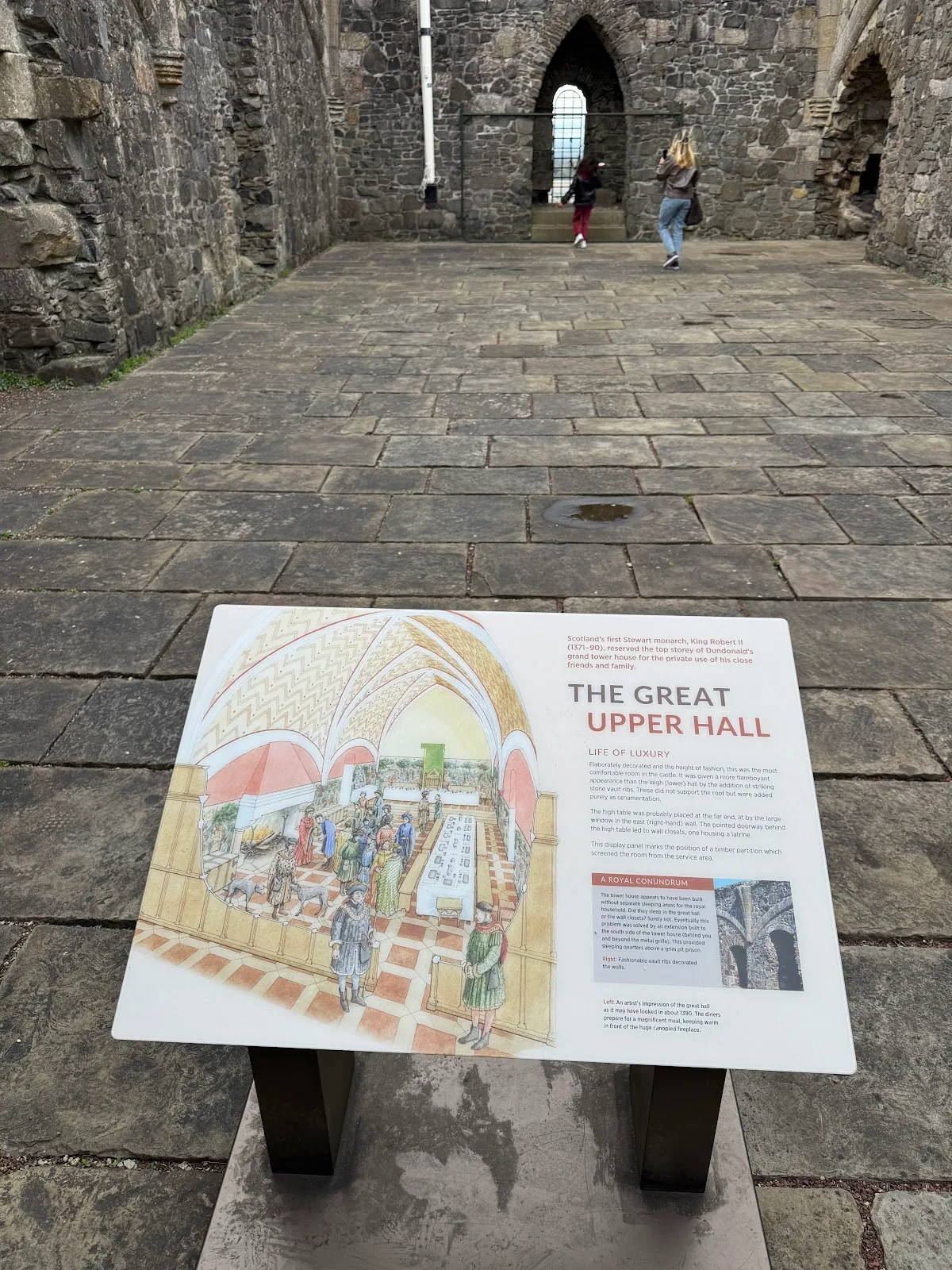
Nestled atop a prominent hill in the charming village of Dundonald, Ayrshire, Dundonald Castle stands as a proud testament to Scotland's rich and often turbulent past. Its strategic location offers breathtaking 360-degree views across the Firth of Clyde, Arran, and the sprawling Ayrshire countryside – truly a photographer's dream and a history enthusiast's delight.
Where is this Historical Gem Located?
Dundonald Castle is easily accessible, situated just a short drive from Kilmarnock and Irvine, and within comfortable reach of Glasgow. Its postcode, KA2 9EY, will guide you right to its doorstep, making it a perfect day trip destination for both locals and tourists exploring the west coast of Scotland. The castle's elevated position not only provides incredible views but also hints at its historical significance as a defensive stronghold.
The Rich History of Dundonald Castle
The history of Dundonald Castle is as layered and intriguing as its ancient stone walls. The current castle is actually the third to occupy this commanding site.
Early Beginnings: The earliest known structure on the site dates back to the Iron Age, a fort that predates any medieval castle. Following this, a timber-and-earth motte-and-bailey castle was constructed in the 12th century, likely by Walter FitzAlan, the first High Steward of Scotland, an ancestor of the Stewart royal line. This early castle would have played a crucial role in controlling the surrounding lands.
The Stewart Stronghold: The most prominent and visible remains today belong to the formidable castle built by King Robert II, the first Stewart king of Scotland, in the late 14th century. After a period of destruction of the earlier structures during the Wars of Scottish Independence, Robert II, who had a strong connection to Ayrshire, chose Dundonald as a key residence. It was here that he spent considerable time, and it's even believed he died at the castle in 1390, making it a significant royal residence during the early Stewart dynasty. The castle's design, a large tower house with impressive defensive capabilities, reflects the architectural trends of the time.
Later Ownership and Decline: Following the Stewarts, the castle passed through various hands, including the Wallaces of Dundonald and the Crawfurds of Loudoun. Over the centuries, its strategic importance waned, and like many Scottish castles, it eventually fell into disrepair. By the 17th century, much of the castle was in ruins, its stones sometimes repurposed for local buildings.
Preservation and Present Day: In the late 19th and early 20th centuries, efforts began to preserve what remained of Dundonald Castle. Today, it is a Scheduled Monument, cared for by Historic Environment Scotland, and managed by the dedicated team at the Friends of Dundonald Castle. Their commitment ensures that this vital piece of Scottish heritage remains accessible and understood by all.
Events and Experiences at Dundonald Castle
Beyond its historical significance, Dundonald Castle is a vibrant community hub. The Friends of Dundonald Castle actively host a diverse range of events throughout the year, making it a dynamic place to visit time and again. From historical re-enactments that bring the past to life with thrilling displays of medieval combat and daily life to engaging children's activities like the Easter bunny hunt we enjoyed, and even educational workshops and seasonal fairs – there's always something happening. These events truly enhance the visitor experience, offering unique opportunities to immerse oneself in the castle's atmosphere and learn more about its fascinating story. Be sure to check their official website or social media channels for their up-to-date events calendar.
P.S. This is my least favorite castle out of all the castles I've visited in Scotland so far.




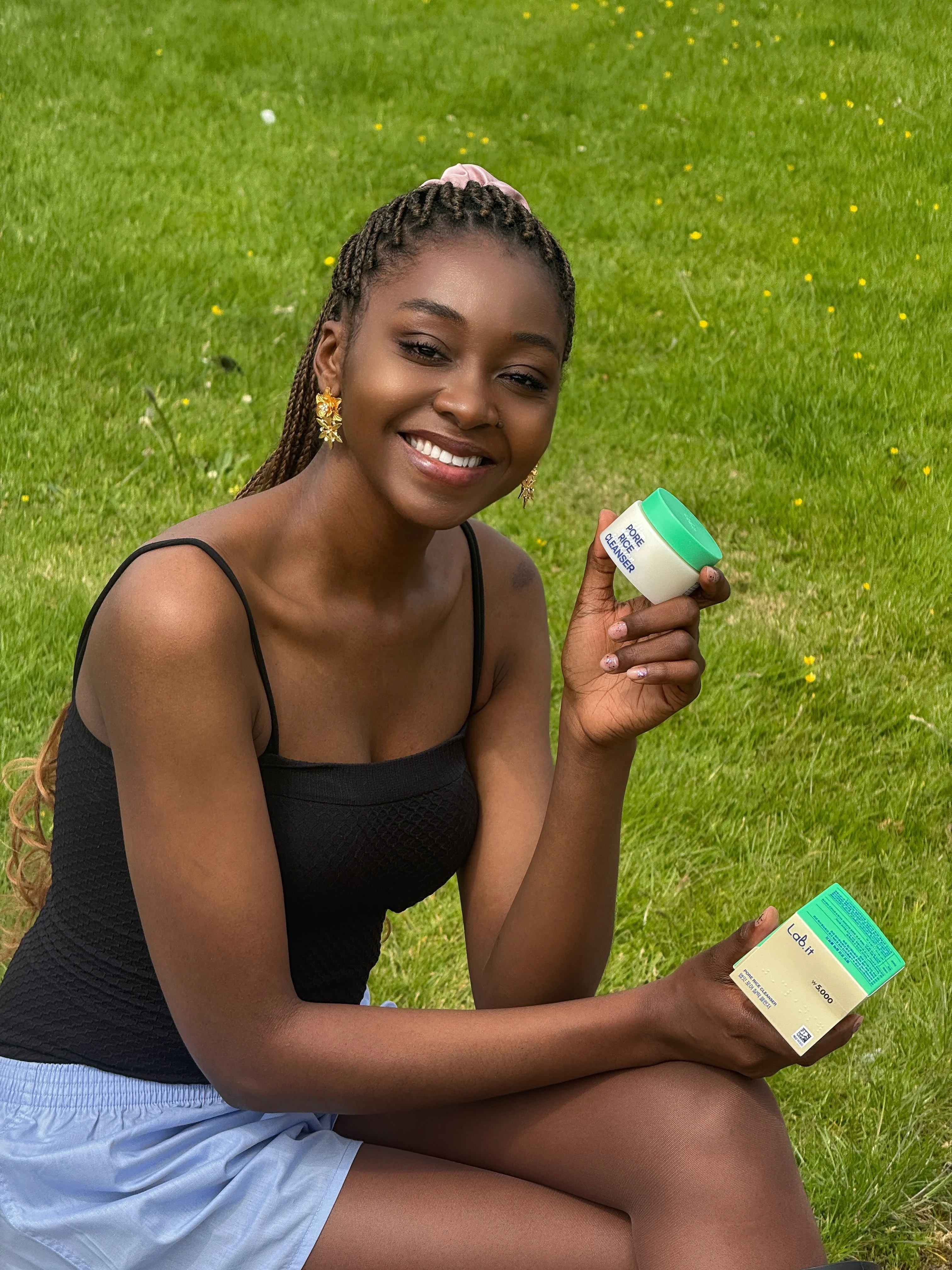
I've been using the Lab.it Pore Rice Cleanser for some time now. When I received the product, I really wanted to give it an honest review, as I always do. So, here's my genuine opinion.
The product is not scented, which makes it suitable for anyone. But what really made this cleanser stand out for me is how my face feels after using it. Even if I don't apply cream immediately, my skin doesn't get uncomfortably dry. The texture is good too. I've heard of some Asian brands but hadn't tried them before, so maybe I was lucky enough to be sent this product, and it really suits my skin.

How I Use It
The instructions say to take an appropriate amount, lather well, gently massage the face, and rinse thoroughly with lukewarm water. However, I use it a bit differently: I apply the pore rice cleanser to my skin, spread and massage it, and then I often leave it on for a while if I'm doing other things, rinsing it off when I'm done. This particular cleanser is much better than liquid cleansers because it doesn't dry out your skin—at least, it doesn't for me.
I absolutely love this cleanser because it improves my skin clarity, brightens my under-eye area, leaves a rich, moisturizing feeling, and keeps my skin hydrated. It also helps tighten pores, giving me deep hydration and soft, beautiful skin. It's safe for daily use and vegan, making it ideal for sensitive skin.

Texture & Feel
The cleanser has a soft and bouncy texture. It's described as having a "mochi feeling," but since I haven't tried mochi before, I can't compare it directly. For me, it just feels incredibly fresh. Its elastic, creamy, dense, and cushiony texture gently adheres to the skin, effectively drawing out impurities and providing a satisfying, purifying pore cleanse, leaving skin refreshed. It's said to be the secret to baby-soft skin. The tannin green helps tighten pores and moisturize the skin, while rice peptides nourish for luminous, sebum-cleared, and smoother skin.


But, typical, right? My partner was like, "Nah, babe, the map says it's closed." I had a feeling it was just their office, not the whole nature reserve, but bless his heart, he took me to the part covered by Historic Scotland instead. And Honestly? It was absolutely brilliant! The only catch was, since we had our RSPB membership, we had to pay to get in here. But let me tell you, it was SO worth it for the boat ride to the castle.
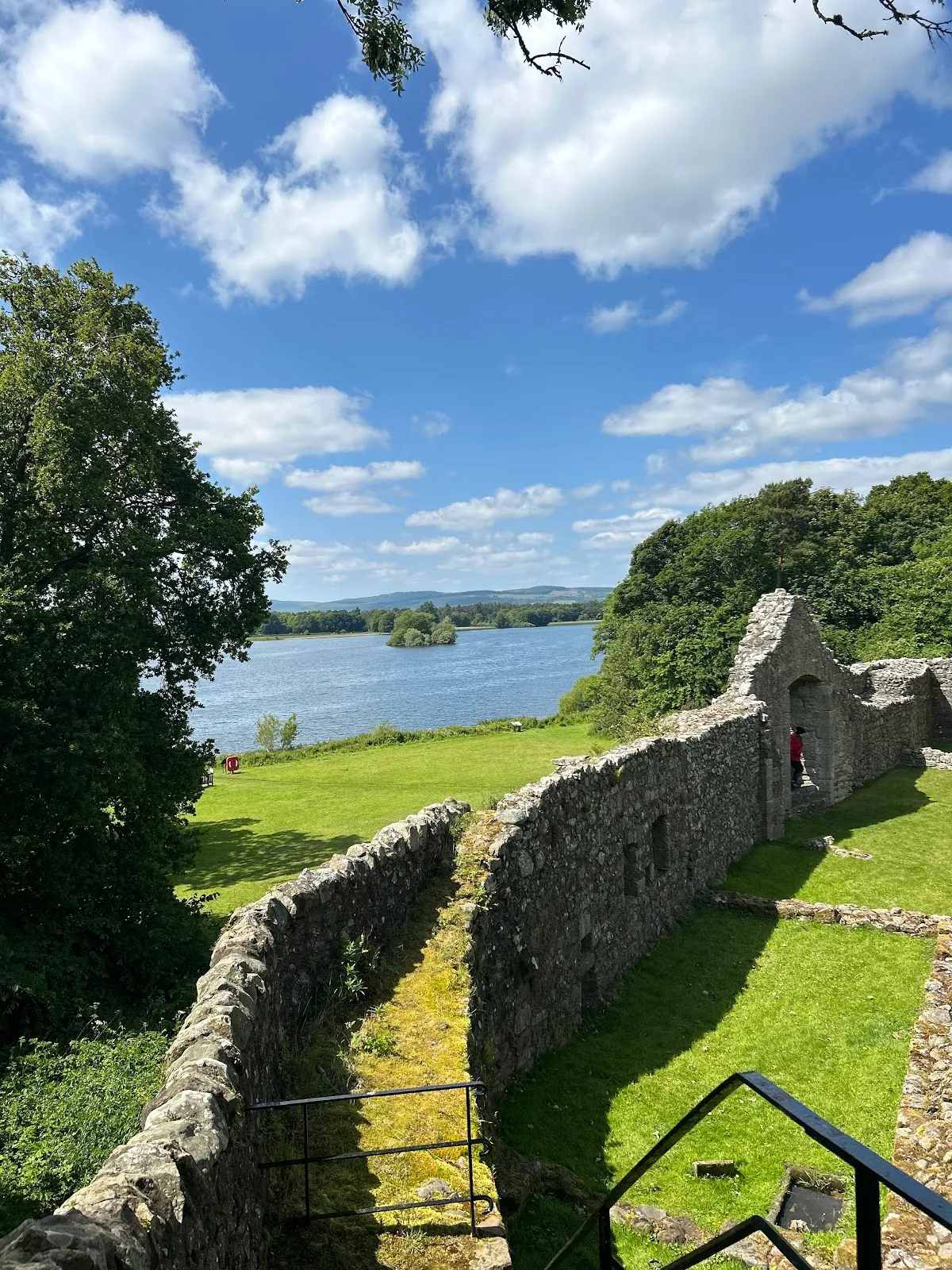
So, here's the deal: there's free parking, which is always a win, right? But then, to get to the iconic Loch Leven Castle , you have to take a boat; it is an island. It cost us about £22, which included the ride over to the island where the castle sits. Before we even took off, our boat rider (who was super lovely, by the way) gave us the lowdown: "Stay seated, no phones over the water, don't stand up until we've stopped," and the kicker: "If your phone falls in, I'm not stopping—we can't find it anyway." I'll only stop if someone falls in." Talk about a clear message. There were four of us on the boat, and we just sat back, soaked in the absolutely stunning views of Loch Leven, and before we knew it, we were at Loch Leven Castle itself. The castle is definitely showing its age and bits are falling apart, but the sheer beauty of the location and getting to actually step inside? Priceless.
Now, let's talk about the history of this incredible place, because Loch Leven Castle is absolutely steeped in it. This isn't just any old ruin; it's a place with some serious stories to tell. The castle itself dates back to the late 14th century, making it over 600 years old. Imagine all the history these stones have seen.
But the most famous resident, without a doubt, was Mary, Queen of Scots. She was imprisoned here in 1567, after being forced to abdicate her throne. Can you even imagine? Trapped on an island in the middle of a loch. She was held here for nearly a year, and let me tell you, she did not go quietly. She tried to escape not once, but twice. Her first attempt involved switching clothes with a laundress, but she was recognized by a boatman and her escape was foiled. Her second, more successful attempt, in May 1568, was much more dramatic. With the help of George Douglas (the castle owner's younger brother, who was totally friendly with her) and a young orphan named Willie Douglas, she managed to get hold of the castle keys. Willie locked the gates behind them, threw the keys into the loch (talk about commitment), and they rowed across to the shore where Lord Seton was waiting with horses. She was free. For a little while, anyway. It's such a thrilling part of Scottish history, and standing in the very castle where it happened feels good.
A quick note for you fellow foodies. There is a restaurant at Loch Leven, but at the moment, it's unfortunately closed. I'm hoping it'll reopen soon, because imagine grabbing a bite with those views.
How to Get to Loch Leven from Glasgow or Edinburgh:
Getting to Loch Leven is super straightforward from both Glasgow and Edinburgh , making it a perfect day trip!
- From Glasgow: It's roughly an hour to an hour and a half drive. You'll want to head east on the M8 towards Edinburgh, then pick up the M90 north towards Perth. Take junction 5 (A911) for Kinross/Milnathort, and then follow the signs for Loch Leven.
- From Edinburgh: Even easier. It's about a 45-minute to an hour drive. Just jump on the M90 north towards Perth and take junction 5 (A911) for Kinross/Milnathort, and then follow the signs to Loch Leven.
Public transport is a bit trickier, as you'd likely need a combination of trains and buses, so I'd definitely recommend driving if you can for the most flexibility.
So, there you have it. My birthday wish came true, even with a little detour, and I got to explore a truly historic part of Scotland. If you're looking for a dose of history, stunning scenery, and a unique boat trip, Loch Leven Castle is an absolute must-visit. Just don't drop your phone in the loch.
Address : Pier Rd, Kinross KY13 8UF
In case of emergency, an emergency line and defibrillator are available on the island. Should you get stuck, miss your pickup, or if no one arrives to collect you, please use the emergency line.
Did I mention that we ended up signing up for Historic Scotland membership? Yes, we did.