
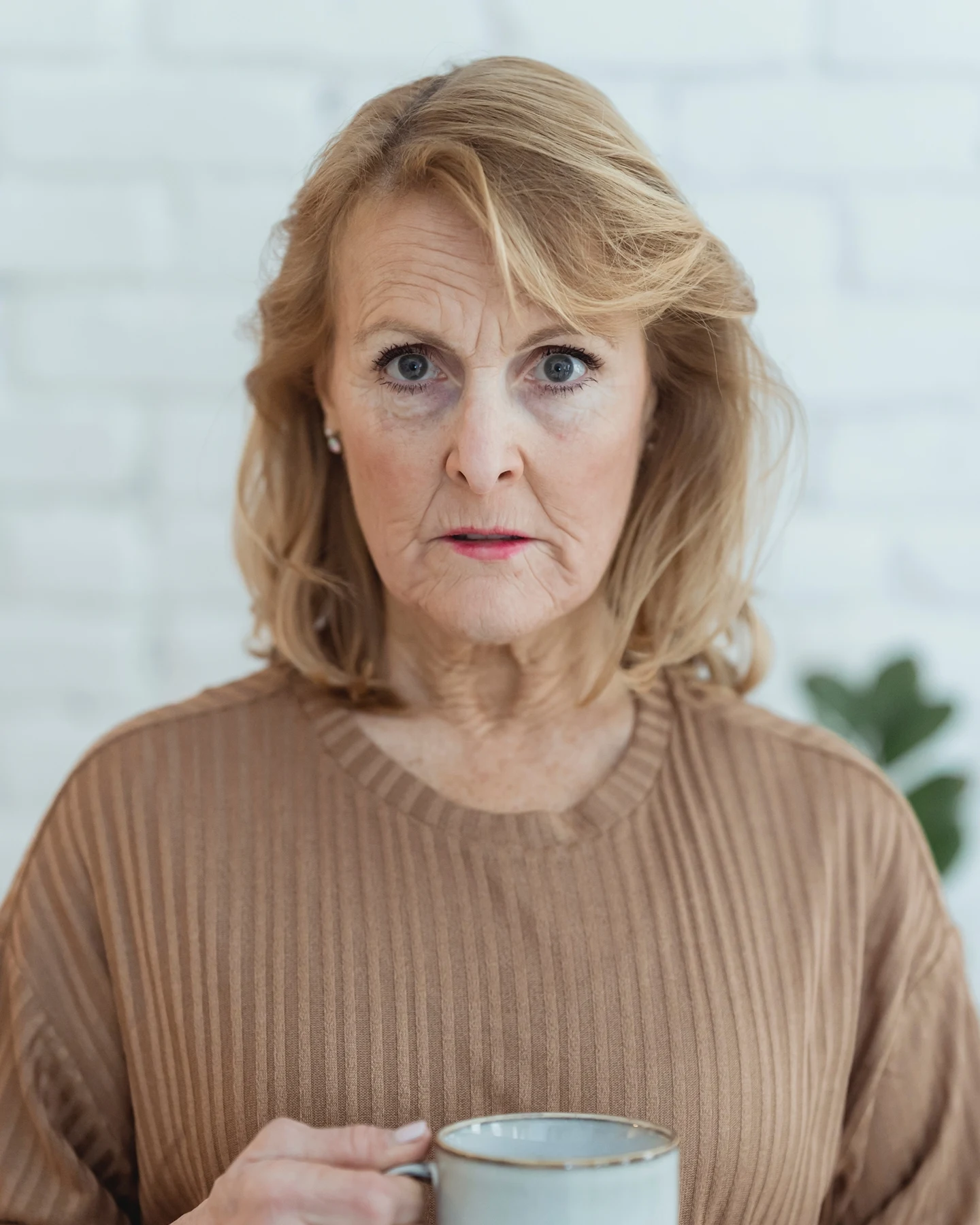
Did you know that over two-thirds of the 6.2 million people in America who have Alzheimer's disease are women? This means that women are nearly twice as likely to have Alzheimer's disease as men. Alzheimer's disease is more common among women, but why is this so?
Alzheimer's disease is a progressive brain ailment that gradually impairs memory and thinking abilities, eventually impairing the capacity to do even the most basic tasks. In the majority of patients with the condition—those with late-onset symptoms—symptoms begin in their mid-60s.
Women live longer than men.
The primary reason is that women live longer than men. When actuarial life tables are consulted, it becomes clear that a baby girl born in 2019 is anticipated to live five years longer than a baby boy: 81 versus 76 years.
Age is the most important risk factor for Alzheimer's disease; the older you get, the more likely you are to get the condition. For instance, the incidence (the number of people diagnosed with Alzheimer's disease each year) varies according to age:
Each year, four out of every 1,000 people aged 65 to 74 get Alzheimer's disease.
Each year, 32 people aged 75 to 84 develop Alzheimer's disease.
Alzheimer's disease affects 76 out of 1,000 adults aged 85 and older each year.
Thus, one reason there are more women with Alzheimer's disease than men is that our society has 5.7 million older women than older men, and the older you are, the more susceptible you are to having Alzheimer's disease.
However, this is not the complete explanation.
Alzheimer's disease is more prevalent in women.
Women have a somewhat higher risk of having Alzheimer's disease later in life than men. One study monitored 16,926 people in Sweden and discovered that women were more likely to be diagnosed with Alzheimer's disease than men of the same age, beginning at age 80. Similarly, a Taiwanese study discovered that women had a larger likelihood of developing Alzheimer's disease over a seven-year period than men. Furthermore, a meta-analysis of the Alzheimer's disease incidence in Europe discovered that roughly 13 women out of 1,000 developed Alzheimer's disease per year, compared to only seven men.
Thus, women living longer than men cannot be the whole explanation for why women are more likely than men to develop Alzheimer's disease, as women are more likely to be diagnosed with the disease even among individuals of the same age.
Women do not have a higher incidence of non-Alzheimer’s dementia than men.
One hint to the solution to this issue is that women do not have a higher risk of having dementia from causes other than Alzheimer's disease. For instance, a study of dementia rates in Sweden discovered that women and men were equally likely to develop non-dementia Alzheimer's as they aged. The fact that Alzheimer's disease rates vary by gender but not for non-dementias shows that there must be a unique connection between Alzheimer's disease and gender.
Amyloid deposition in Alzheimer's disease may represent a defense mechanism against infections.
Another piece of the puzzle comes from Harvard researchers, who believe that amyloid, one of the pathological components of Alzheimer's disease, is deposited in the brain to combat infections. If this hypothesis is right, we may consider Alzheimer's disease to be a result of our brain's immune system.

Gülizar Nisa Uray, Engin Altan Düzyatan, and Belçim Bilgin feature in the Turkish film My Father's Violin (Turkish: Babamin Kemani), directed by Andaç Haznedaroglu and released in 2022. Netflix released the film on January 21, 2022.
Is it a good idea for you to watch the movie My Father's Violin? Yes, this is a film with a novel plot and a fantastic conclusion. Two brothers were abused by their alcoholic stepfather and intended to flee, but things didn't go as planned. Years later, one has made a reputation for himself as a musician (after being separated, but acceptance was not easy due to past events.
Azman, the daughter of one of the brothers, is a really gorgeous and loving spirit. Her father, Ali Riza, left her with her uncle, Mehmet, who refused to seek custody of her and his trusted friends when he died. Will the uncle accept her, despite the fact that her father's friends want custody of the little 8-year-old girl, Ozlem, or will social services take over?
The summary of this movie is about an orphaned girl who bonds with her emotionally distant, successful violinist uncle through their common sadness and affinity for music.

COVID-19 rates are rising across the country and in many parts of the world, making it more critical than ever to protect ourselves and others. The greatest defence against COVID-19 is a multi-layered approach, beginning with vaccines and boosters for everyone who is eligible.
People who have been vaccinated and boosted are significantly more protected from serious illness, hospitalization, and death. Everyone, including those who have been vaccinated, is at risk of contracting a highly contagious variation like Omicron if they contract it. Experts estimate that if we all agree to follow mask rules and other conventional preventive measures in places where vaccination rates are low or COVID cases are on the rise, we can save thousands of lives and help limit the pandemic.
Why do we think masks are effective?
The benefits of medical and nonmedical masks are backed up by a growing amount of information. These reviews (here and here) and observational studies (here, here, here, and here) provide some of the most compelling evidence that wearing a mask reduces infection rates. Masks help trap bigger respiratory droplets as well as some of the smaller particles known as aerosols, as shown in this graphic from the New York Times.
Wearing a mask can help protect you from viruses that spread through the air, such as COVID-19 and colds and flu. Some individuals believe that masks trap CO2 or limit the amount of oxygen inhaled. This is not the case. When you breathe out through a mask, CO2 escapes; when you breathe in, oxygen enters.
There is no such thing as a perfect or definitive study; in fact, such studies would be impossible to conduct. However, there is a lot to be said about wearing a mask, and there is little to no evidence that it causes harm.
What is the best type of mask?
Wear the most protective mask you can find, according to the Centers for Disease Control and Prevention (CDC).
Wearing masks that filter out very minute particles on a regular basis provides the best protection against highly contagious versions like Omicron. Some examples are:
N95 masks, which are approved by the National Institute for Occupational Safety and Health (NIOSH), are comparable to KN95 masks, which are certified in China but not by NIOSH.
Counterfeit N95 and KN95 masks have become all too popular. The Centers for Disease Control and Prevention (CDC) has some helpful tips on how to recognize fake masks.
Surgical masks are useful, but they are less protective, mainly because of their loose fit. If you're using surgical or cotton masks, some experts recommend double-masking.
What about tightly woven cloth masks that totally cover the nose and mouth, have a wire bridge, and at least two layers of washable, breathable fabric? Gaiters and bandanas may provide little protection and aren't usually the first choice because they weren't designed to provide tight facial coverage and may only have one layer.
Virus particles can more easily escape through masks with vents or valves, hence they are discouraged.
Post a Comment

A BEAUTIFUL FARMHOUSE IN THE AREA OF PIENZA IS FOR SALE.
A turnkey Tuscan farmhouse in the heart of the Val d'Orcia is available with Prima Real Estate for €2.4 million. The Val d'Orcia region, located in the province of Siena, is widely regarded as the best section of Tuscany. For centuries, the UNESCO world heritage site has remained untouched, its natural vistas and breathtaking landscapes serving as a time capsule from Renaissance times. Authentic Tuscan farmhouses, such as this one, are among Tuscany's most sought-after properties. The 8396-square-foot property has eight bedrooms and is divided into two independent sections with the option of merging them. With beamed ceilings and terracotta tile floors, the refurbished turnkey home retains much of its original charm. The property's swimming pool has an unusual indoor/outdoor design. The home is surrounded by gardens and includes an annexe that may be turned into a yoga studio or gym. The property, which sits on 12+ acres, is in a fantastic location, just a short drive from the famed Italian cities of Pienza, Montepulciano, and Montalcino. See more on the blog, including a link to the original listing!

Distances between towns/cities: 7 km to Pienza, 50 km to Siena, 85 km to San Gimignano, and 125 km to Florence.
Airports: Florence (135 km), Pisa (200 km), and Rome (200 km).


All parents want their children to be successful in life — and by that, we mean not only having a good job and earning a good living but also being happy. And all parents wonder how they will accomplish this.
According to Harvard's Center on the Developing Child, it's less about academics and extracurricular activities and more about developing a basic set of abilities that enables people to overcome life's inevitable obstacles. All of these abilities fall under the category of executive function skills, which we utilize to regulate our behaviour. The majority of successful and happy people possess good executive function abilities.
What are the five most critical core skills?
ability to create and carry out concrete goals and plans.
Concentration is the capacity to concentrate on what is critical at any particular time.
Self-control entails exerting control over our responses to not only our emotions but also stressful situations.
Not only do we observe the people and things around us, but we also understand our place in them.
Flexibility is defined as the capacity to adjust to changing circumstances.
While these are abilities that children (and adults) can and do acquire throughout their lives, two critical stages are early childhood (ages 3 to 5) and adolescence/early adulthood (ages 13 to 26). During these windows of opportunity, children can benefit from learning and using these abilities. We'll discuss the second stage of adolescence in this post.
The most effective approach to acquiring any ability is to practice it. Here are some ideas for parents who aren't sure how to help and when to step aside.
Planning
When children are small, parents and caregivers naturally make plans for them. However, as children mature into adolescents, they must learn to do it on their own.
Take care not to micromanage your teen's life. Rather than that, establish some ground rules – simple ones like homework must be completed, kids require seven to eight hours of sleep per night, and regular exercise is critical. You may have additional ground rules, such as the requirement to attend family dinners or religious ceremonies. Then delegate the task to your teen. Intervene only if it is evident that ground rules are being persistently broken.
When teenagers have long-term projects, such as research or college applications, sit down with them and discuss how they intend to complete them. Allow them to generate ideas before you do!
Engage your teenagers in the planning of family activities and trips, as well as home renovations and other initiatives. Allow them to make some decisions (even if you may not always agree with them).
Awareness
Teenagers can be extremely self-aware, but primarily of their own world. Assist them in developing the ability to see beyond it.
Discuss current events and news articles. Discuss how things influence people and how different people may perceive them differently.
Take your teen on adventures—even a simple walk in the woods or a visit to a nearby town can provide them with the opportunity to look around and notice things they might otherwise overlook.
As a family, participate in community service events; demonstrate to them how they can make a difference.
Establish family rituals for checking in, such as over dinner. Allow everyone to share their day.
Subscribe to:
Posts (Atom)