


I know, I know...it’s The Map Men. I’ve watched countless videos of them doing their wonderfully nerdy deep dives into the weirdest corners of cartography on YouTube, and I’ve laughed every single time. Their humor is just so specific and smart, but when I saw This Way Up, a beautiful, chunky hardback promising “geography, puzzles, and family fun,” I kept skipping over it. Perhaps because I felt like I already knew what I was going to get, or maybe I was just intimidated by adding another book to my pile. What finally drew me to read the book was the book cover.
But here’s the thing: I kept getting drawn back to it. It’s the color, mostly. It’s got this gorgeous, tactile feel, and the combination of the vibrant, almost retro-looking primary colors on the jacket is an immediate grabber. It manages to look both scholarly and completely playful at the same time, which, if you’re a fan of Map Men videos, is essentially their brand distilled into one physical object. After several cycles of picking it up, flicking through it, and putting it down again, I finally admitted defeat and started reading.
And thank goodness I did, because this book is a triumph.
For those who haven’t watched their videos, Jay Foreman and Mark Cooper-Jones, The Map Men, are essentially cartographical nerds who use their platform to uncover the genuinely bizarre, hilarious, and sometimes frustrating stories hidden within maps and borders. Their debut book, This Way Up, translates that unique, witty outlook onto the page flawlessly, which is a rare feat for YouTube-to-book transitions. This isn’t just a compilation of facts; it’s a brilliantly entertaining collection of essays, puzzles, and downright baffling geographic oddities that will make you rethink every time you’ve looked at an atlas. Richard Osman called it ‘Educational, smart and funny’—and he’s absolutely right. It’s the kind of book that makes you burst out laughing and immediately want to share the absurd fact you just learned with whoever is nearest.
Speaking of sharing, let me tell you about the morning I finally decided to take the photos for this post. It was pure chaos, the kind of morning that usually sends me straight back to bed. I was already running ridiculously late for work, but I was determined to get that perfect cover shot. I rushed out the door, only to realize I hadn't eaten a thing and was absolutely not ready to face the workday on an empty stomach. So, I had to stop at McDonald's for their breakfast—priorities, right? Hot chocolate and egg McMuffin are not healthy but a girl has to eat.
My partner was not having it that morning, bless him. As I was trying to angle the hardback just right in the less-than-ideal car light, grumbling that the photos “weren't coming out so well,” he was much more focused on me getting to work on time. The gentle, slightly panicked nagging from the passenger seat was a perfect soundtrack to my hurried amateur photography session. It’s funny how life insists on getting in the way of even the simplest creative tasks.
But hey, here are the photos, chaotic start and all. And I think that rush, that slight edge of 'everything's a bit much,' actually reflects the book’s content perfectly. Because geography, as The Map Men prove, isn't neat and tidy; it’s full of ridiculous human decisions, historical accidents, and downright messiness.
So, what is the book actually about?
This Way Up explores everything you never knew you needed to know about the world, structured around incredibly entertaining themes. You'll learn about things like the bizarre history of time zones, the world’s most pointless borders (prepare for your mind to be blown by the intricacies of the Baarle-Nassau/Baarle-Hertog boundary), and the incredible stories behind seemingly boring place names.
It’s the anecdotes that truly shine, however. The authors have a knack for finding the hilarious human element in dry government policies and ancient maps. For instance, I was captivated by the sheer absurdity of some of the geopolitical messes they describe—situations so illogical that they couldn’t have been invented. It provides a kind of intellectual satisfaction, the feeling of understanding a massive, global inside joke. The book manages to be accessible enough for casual readers (it's officially recommended for "family fun") while still offering enough depth to satisfy even the most hardened geography aficionado.
If you are a lover of puzzles, general knowledge, or just fantastic storytelling, you should absolutely pick up this book. It’s an instant Sunday Times bestseller and a Waterstones Best Nature & Travel Writing Book 2025 for a reason. It truly lives up to Matt Lucas’s praise that their unique and witty outlook translates brilliantly onto the page.
Have you read This Way Up yet? If not, let me tell you why you should: it’s the perfect antidote to boring non-fiction. It’s educational without ever feeling like homework, and it's so funny you’ll forget you’re learning.
The Map Men’s Funniest Stories
If you’re still on the fence about picking this up, let me stop you right there. This book is hilarious, and I’m not just saying that because I’m biased towards nerdy humor. The funny stuff isn't made up; it's pulled straight from the archives of human incompetence, which is, honestly, the best kind of funny.
Here are three of the stories that genuinely made me snort-laugh while reading:
1. The Case of the IKEA Map That Forgot an Entire Country (And it Wasn't the First Time!)
You know how sometimes you’re in IKEA, and you’re absolutely convinced the directions for the BILLY bookcase are written by someone who has a personal grudge against you? Well, it turns out their mapmakers are just as chaotic, but on a global scale.
The Map Men kick off the book with the unbelievably true story of a huge, glossy, decorative world map sold by IKEA. It was beautiful, but there was one massive, embarrassing problem: New Zealand was simply not there. Gone. Vanished. They just... forgot. I’m talking about a country the size of Great Britain, wiped off the face of the cartographical earth by a furniture retailer.
The sheer audacity of the blunder is funny enough, but The Map Men lean into the absurdity of it. It’s not just IKEA! Apparently, New Zealand has been snubbed so many times by mapmakers that it’s become an internet meme. The book reminds you that maps aren't just these infallible documents; they're made by humans who sometimes just accidentally delete a whole nation because, well, it was probably a late Friday afternoon. It makes you realize that when you look at a world map, there's a non-zero chance that some poor map intern just missed a continent-sized blob of land. Whoops!
2. The Border-Crossing Pub Where You Have to Move Your Pint Mid-Sip
Forget your local pub drama—this story is about a border so unbelievably messy, it makes crossing the street feel complicated. This is the tale of Baarle-Nassau and Baarle-Hertog, a single town where the border between the Netherlands and Belgium zig-zags through houses, gardens, and, yes, a pub.
The Map Men explain that this isn't a neat, straight line. It's a complicated jigsaw puzzle of tiny little Belgian enclaves sitting inside the Netherlands, which themselves sometimes contain even smaller Dutch counter-enclaves! It's geographic inception.
The funniest part is the practical fallout, particularly for the people running the establishments caught in the crossfire. There’s a pub (The Map Men might talk about it being the A La Frontière cafe) where the official border runs right through the middle of the dining room. Back in the day, if you were sitting on the Belgian side and the Dutch side had stricter closing times, the landlord literally had to ask you to pick up your drink and move two feet over to the Belgian side to finish your pint! Can you imagine? “Sorry mate, the Netherlands is closing, slide over to Belgium so you can keep drinking.” It’s a perfect illustration of how seriously (and ridiculously) people take lines drawn on a map.
3. The Paper Town That Ended Up Sending People on a Real-Life Wild Goose Chase
This story is one of my favorites because it proves that mapmakers sometimes have a wonderfully petty sense of humor. Before digital mapping, cartographers would often secretly add a completely fake, non-existent place to their maps—a “paper town” or “trap street.” They did this because if they ever found their map copied by a rival company, the fake town was proof of plagiarism. Smart, right?
But The Map Men share the hilarious consequence of this trick. A tiny, fictional village named Agloe was placed on a map in upstate New York. Decades later, another map company came along and, seeing this little dot on the map, decided it must be real, so they put it on their map too.
But here’s the kicker: Eventually, someone built a general store at that exact spot, and they literally named it Agloe General Store because they saw the name on the map! The fictional place had become real because of the map error itself! The whole thing snowballed from a made-up copyright trap to a genuine, physical location. It's the ultimate 'life imitates art' moment, except the 'art' was just a grumpy cartographer trying to catch a thief. It perfectly shows how a simple, silly mistake can accidentally reshape reality.
Seriously, those are just three drops in the ocean of hilarious chaos in This Way Up.
Grab a copy, turn it every which way, and prepare to have your understanding of the world completely, and hilariously, upended.


One of the most confusing things I noticed was during our friendly debates. We'd argue about an issue, like health statistics in a particular country, and she would debate while clearly reading from her phone, as if we didn't notice. We were arguing about what we'd already read, but she'd be looking up facts in real-time, often switching to an entirely different, unrelated topic mid-argument. It was so draining, and it always left me feeling dismissed and incredibly frustrated.
I read Shanna Pearson's book, Invisible ADHD: Proven Mood and Life Management for Smart Yet Scattered Women, an educative read. Published in late 2025, this isn't just another textbook; it's a compassionate and practical guide that bridges the gap between clinical knowledge and lived experience. Pearson, a seasoned ADHD coach with a background in psychology, has created a resource that speaks directly to the often-misunderstood presentation of ADHD in women.
The book is an absolute game-changer because it moves beyond the stereotypes of inattentive or hyperactive types and goes into the nuanced, "invisible" symptoms that many women, and even some men, experience. It reframes what we think of as disorganization or flightiness as a result of a neurodivergent brain struggling with executive functions.
Pearson's approach is both validating and empowering. She explains that it’s not a character flaw but rather a neurological difference that can be managed with the right tools. The book provides over 100 practical strategies for everything from managing emotional dysregulation to structuring daily life. To help you understand its core concepts, here's a simplified table illustrating a few key examples from the book.

| Common Behavior | Underlying ADHD Challenge | Pearson's Practical Tool |
| Forgetting appointments/tasks | Poor working memory and task initiation. | "The Two-Minute Rule": If a task takes less than two minutes, do it immediately to prevent it from being forgotten. |
| Emotional outbursts or overreactions | Emotional dysregulation. The brain struggles to filter and process intense feelings. | "The 5-4-3-2-1 Grounding Technique": A simple mindfulness exercise to quickly anchor yourself in the present and regain control. |
| Chronic disorganization/messiness | Difficulty with long-term planning and sustained attention. | "The 'Clutter-Free' Hotspot": Designate one small area (like a bedside table) to always keep clear, providing a visual cue of control. |
The Path to Solutions: What I Learned from the Book
Beyond simply validating the "why," Pearson's book provides a powerful "how." She offers a treasure trove of practical, everyday solutions that don't rely on willpower but on working with the ADHD brain's natural wiring. It's like being handed a user's manual for a brilliant but sometimes chaotic operating system.
- "The Brain Dump": Instead of trying to hold on to a dozen different thoughts, a person with ADHD can simply write them all down on a piece of paper or in a note-taking app. This frees up mental space and prevents that overwhelming feeling of having too much to do at once. It's like clearing out your computer's RAM so it can run faster.
- Creating a "Command Center": This is a designated, highly visible spot where all essential items like keys, wallet, and phone live. The idea is to make it impossible to lose them, as there is only one place to look. This might mean a specific hook by the door for keys or a tray for phones, so they don't spend twenty minutes searching for them, wasting time.

- "The Two-Minute Rule": This simple idea is deceptively effective. If a task takes less than two minutes, do it immediately. This could be putting a dish in the dishwasher, sending a quick email, or taking out the trash. These small, completed tasks provide a tiny hit of dopamine and build momentum, making it easier to tackle bigger projects.
- "Body Doubling": This is the concept of doing a task alongside someone else to stay focused. For many with ADHD, simply being in the presence of another person who is also working can help them stay on task. This might explain why my friend can't focus alone but can get things done while on the phone with me. It creates a gentle, external sense of accountability that bypasses the internal struggle.
 Its a lovely Saturday morning, what are you doing for the weekend?.
This is a creative and practical post. Thanks for joining us this morning.
The new Family History Bright Leather Book from GRAPHICIMAGES.COM which helps you to chronicle your family history for generations to treasure. Write about the members of your family, family tree and lots more. As stated there are 48 family tree pages, enough to fill a century of descendants. custom made, with my name boldly written on it. Diaries are used for different purposes, but this has been designed to keep family memories, well detailed with months and no date to enable you write down the correct date.
DESCRIPTION
Size: 8-3/4" x 10-3/4", 504 pages
Leather : 100% genuine goat skin leather, which is one of the best in the market now. The quality is everything, so outstanding, every family should have this book. Not only families,you too as an individual can also get this book.
Paper color : The color is a cream-white, acid-free paper (which helps to preserve documents and artworks for a long period of time) with gilt edges. It also has a double face satin ribbon which serves as a marker and reminder.
This book is smyth-sewn which is the highest quality binding available in the market today, archival safe book because the pages are physically sewn into the book using binders thread and further reinforced with fabric backing and adhesive to create the most usable and durable books. Due to smyth-sewing it lays flat to users comfort making writing and reading easier.
Personalization: The availability of Personalization by Graphic images makes them outstanding and market friendly. You have a choice of inputting your name (family name) on the dairy, which makes it more interesting and professional. My name (JACOB) was written boldly on the bottom right side of the book, it felt really personal.
CONTENTS
Family History records 370
Family History 400
In a Lifetime 458
Oral History 480 (the collection an study of historical information using tape recording of interviews with people having personal knowledge of past events).
The World: 485 (showing the world map)
Perpetual calendar
Keepers of the book.(you can put down a number of people which you want to keep this book)
Graphic Image i highly recommended and offers books of different types and purposes, such as the Calendars and planners which comprises of agendas and address books, pocket datebooks,desk address books and pocket address books. You can also get the Album and frame, Journals and notebooks, Travel books such as atlas (read more on travel tips ), Office and home, Leather accessories such as wallet, card cases and envelops, Tech such as iPad cases and phone cases, lastly Books (REFERENCE BOOKS).
A lot to get from visiting the online Graphic store, sign up and receive 10% off with email sign up.
Follow graphic image on Instagram and Melody Jacobs blog on Instagram.
No doubt we enjoyed writing about my new family history book, tell us what you think about this book and dont forget to visit and shop with GRAPHIC IMAGES.
Have a lovely weekend.


Some workplaces honestly feel like movie sets where everyone is performing a version of themselves instead of showing who they really are. Some people spend the whole day acting, and some dramatize everything, while only a few people remain their real selves in a work environment.
One thing I have noticed about certain workplaces is how emotionally exhausting they can become. You see people smiling, but you can sense that the kindness is more of a workplace courtesy than something genuine. Everyone becomes extremely polite in a way that feels scripted, almost like watching actors perform instead of human beings connecting naturally.
To me, that is one of the most toxic environments to be in because it slowly removes honesty, warmth, and authenticity from everyday interactions.
Maybe that’s why Wild Courage: Go After What You Want and Get It by Jenny Wood resonated with me so deeply. I have spent years trying to stay professional, avoid conflict, and fit into workplace environments that often felt emotionally performative rather than authentic.
I picked up Wild Courage expecting another career book filled with predictable advice about leadership, networking, and productivity.
What I didn’t expect was a book that would challenge the way I think about confidence, ambition, risk, and even the parts of myself I’ve spent years trying to tone down.
This book felt personal.
Jenny Wood writes with the kind of clarity that only comes from real-world experience. You can tell she has spent years observing how people succeed, why talented people stay invisible, and what separates those who move forward from those who remain stuck waiting for permission.
The core message of Wild Courage is surprisingly simple:
Many of the traits we are taught to suppress are actually the exact traits we need to succeed.
That idea alone makes this book stand out.
Instead of telling readers to become more polished, more agreeable, or more “professional” in the traditional sense, Jenny Wood argues that success often comes from reclaiming traits that society labels negatively.
Traits like being:
Shameless
Weird
Obsessed
Selfish
Nosy
Manipulative
Brutal
Reckless
Bossy
At first glance, those words sound uncomfortable. Some even sound wrong.
But that’s exactly the point.
The book carefully reframes each trait, showing how these characteristics, when used with self-awareness and integrity, can become powerful tools for growth, leadership, opportunity, and personal success.
And honestly, reading it forced me to reflect on how often people shrink themselves to fit expectations.
One of my favorite parts of the book was the chapter about being “shameless.”
For years, many of us have been taught that promoting ourselves is arrogance. That asking for opportunities is pushy. That visibility should come naturally if our work is good enough.
But real life rarely works that way.
Jenny Wood explains that being shameless is not about ego. It’s about refusing to disappear. It’s about speaking up, advocating for yourself, sharing your ideas confidently, and allowing people to see your value instead of quietly hoping someone notices.
That chapter stayed with me because I recognized how often fear of judgment keeps people silent.
Another trait that deeply resonated with me was “obsessed.”
We live in a culture that praises passion but often becomes uncomfortable when someone is truly consumed by a goal. Yet the people who create extraordinary work are rarely casual about what they do.
Obsession, when directed properly, creates mastery.
That idea challenged me in the best possible way because it made me question where I’ve been holding back my energy or commitment just to appear balanced or socially acceptable.
The chapter on being “weird” was also refreshing. Jenny Wood makes a strong case that originality often comes from people willing to think differently instead of constantly trying to blend in. In many careers and creative spaces, standing out matters more than fitting perfectly into expectations.
The more I read, the more I realized this book is not really about career advice alone.
It’s about permission.
Permission to stop apologizing for ambition.
Permission to stop minimizing yourself.
Permission to take risks before you feel fully ready.
Permission to ask boldly for what you want.
What I appreciated most is that the book never promotes arrogance or selfishness without purpose. Jenny Wood consistently balances courage with awareness, confidence with competence, and ambition with humanity.
That balance gives the book credibility.
It doesn’t read like empty motivation. It reads like practical insight from someone who understands how careers actually work behind closed doors.
Out of the nine traits, the one I’m consciously reclaiming after reading Wild Courage is being shameless.
Not shameless in a careless way.
But shameless about sharing my work, expressing my ideas, pursuing opportunities directly, and allowing myself to be visible without constantly second-guessing whether I’m “too much.”
Because silence rarely creates opportunity.
Reading this book reminded me that many people spend years trying to become acceptable when they should be becoming courageous.
And maybe that’s why Wild Courage feels so relevant right now.
It challenges the invisible rules many of us grew up believing:
Don’t stand out too much.
Don’t ask for more.
Don’t be difficult.
Don’t take risks.
Don’t want too much success.
But the people who change their lives usually stop following those rules at some point.
This book is bold, practical, honest, and deeply thought-provoking. It’s one of the rare career books that doesn’t just tell you how to succeed — it forces you to confront what fear, insecurity, and social conditioning might be preventing you from doing.
If you read Wild Courage, don’t just read it passively.
Ask yourself which of the nine traits you’ve suppressed the most.
Then ask yourself what your life or career might look like if you stopped treating that trait like a flaw.
For me, this book wasn’t just about professional growth.
It was about reclaiming parts of myself I didn’t realize I had been hiding.
And that’s what made it memorable.
And as I held the Wild Courage paperback after finishing the final chapter, I realized this book is more than a guide for career growth. It’s a reminder that courage is not always loud. Sometimes courage is simply allowing yourself to be seen fully, honestly, and unapologetically.


Let's be honest for a second.
Have you ever looked at your bank account and felt that cold, heavy knot in your stomach? You know the feeling. It's the anxiety that creeps in when the bills arrive or the panic when you realize you're just shuffling money from one credit card to another, trying to stay afloat.
It’s the reality for so many people: mounting credit card debt, the stress of living paycheck to paycheck, and that draining feeling like you’re running a marathon but never getting ahead. We fall into debt through the slow creep of everyday life—the student loans that feel insurmountable, the "must-have" items purchased with plastic, and the unexpected emergencies. It's a trap, and it feels like the walls are closing in. If that’s you right now, you are not alone.
For years, I’ve been fascinated by the idea of manifestation—the Law of Attraction—as a tool, not just for good parking spots, but for fundamental life change. Could it really work on something as concrete and unforgiving as debt? I mean, I love the positive thinking, but what about the actual, scary numbers?
So, when a personal letter from the manifestation guru herself, Rhonda Byrne, landed on my doorstep, I was speechless.
I’m thrilled to share that I received an advanced copy of Rhonda Byrne’s latest book: 21 Days to Financial Freedom: Countdown to Riches. Rhonda, the incredible mind behind the global phenomenon, The Secret guarantees this book holds the 21 wealth-attracting habits that will bring financial freedom to anyone who puts them into practice. She guarantees it: “I can assure you—from personal experience—they work.”


Just in case you didn't know, I get sent books by different publishers quite often, which means I constantly get to dive into different genres and stories. I haven't completed every single page in this stack just yet, but I wanted to walk you through each one, share my initial reactions, and give you a taste of what makes each title so impossible to put down.
Before we even get into the plots, I have to confess something: I am a total book collector at heart.
One day, I am hoping to build my very own dream library. A proper, rich wooden library filled top-to-bottom with gorgeous spines and special editions. My dad has always loved libraries, and that appreciation definitely rubbed off on me. There is just something magical about having a dedicated room where stories line the walls—and trust me, this new set is going to take pride of place on those future wooden shelves.


It is raining book review on my blog and I hope everyone is loving it.
Are you looking for a book to read this festvie peroid, then go pick up Two's A charm, I mean why not?
I’m absolutely buzzing to tell you about the latest cozy fantasy that completely charmed my socks off: Two's a Charm by the super talented Heather Spellman. Seriously, if you love sister stories, small-town magic, and a touch of mischief (think Gilmore Girls meets Wicked), you need to clear your reading list right now.
This isn't just a book; it's a hug in novel form, with a dark, magical twist. Get ready, because I'm giving you the ultimate, spoiler-free A to Z breakdown of why this witchy tale is a must-read, followed by what made my reader heart swoon.
This is what the story is about:
We meet our two heroines, the sisters Effie and Bonnie. Even though they live in the same house in the same magical town, they couldn't be more different or further apart emotionally.
Effie is the quiet powerhouse. She’s reserved, introverted, and finds her deepest comfort in the safety of the town's huge, dusty library. Her magic is meticulous and contained. She’s the sensible one, the one who follows the rules and is maybe a little too good at hiding away from the world.
Then there’s Bonnie. She is pure sparkle and charisma. The witch everyone loves. Her magic is big, flashy, and sometimes a little messy, just like her life. Bonnie desperately wants to prove her worth to everyone, especially after a recent, very public magical misfire. She’s trying too hard to be the 'perfect' witch.
Their lives are separate until a figure from their past reappears: their estranged Uncle Oswald. Now, Oswald is smooth, charismatic, and seems to be genuinely charming. He arrives with a plea, telling Bonnie that his grand, magical plan to help Yellowbrick Grove, something that will bring huge power and recognition just needs a small, temporary magical boost from her.
Bonnie, desperate to fix her reputation and eager for a quick dose of power, agrees to help Oswald. She sees it as her chance to prove she’s a powerful, competent witch.
But here’s where things go sideways: the spell Misfires. It doesn't just fail; it actively creates a new problem. Instead of a temporary boost, the spell unleashes a tide of dark, sinister magic across Yellowbrick Grove, threatening to corrupt the town’s very essence. Worse, Oswald is absolutely thrilled! It turns out his motives weren't innocent at all. He was seeking that dark power all along, using Bonnie as his magical tool.
Effie, who was always skeptical of Oswald’s sudden appearance and easy charm, is the first to notice the creeping, dangerous changes in the town’s atmosphere and the behavior of the townsfolk.
Suddenly, Bonnie’s fear and Effie’s skepticism collide. Bonnie realizes she’s been terribly used and her attempt to fix her life has potentially destroyed their home. Effie realizes she can't hide in her library anymore; she has to use her controlled, powerful magic to fight back.
This forces the two sisters, who have been avoiding a real conversation for ages to actually unite.
They have to learn how to put aside their old rivalries, their petty fights, and their long-held resentments. They need to figure out how to merge Effie's controlled, book-smarts magic with Bonnie's big, flashy, emotional magic.
The story becomes a thrilling journey of sisterly negotiation and cooperation. They are chasing down Oswald, trying to reverse a dark curse they accidentally unleashed, all while constantly bickering and slowly, grudgingly, rediscovering how much they truly rely on and love each other.


Picture yourself in the South of France in the late summer of 1937. A group of artists and free spirits have gathered for a picnic in a secluded glade, their laughter echoing through the trees. Dresses are loosened in the heat, shoes are cast aside, and a couple share a playful kiss. In that sun-dappled moment, Lee Miller lifts her camera and captures something timeless. This snapshot will come to define the magic and recklessness of youth. That image is where Thomasson begins her story.

From here, the book unfolds like a conversation under the stars. Thomasson introduces us to the circle of friends around that table: the daring photographer Lee Miller, the impossibly brilliant but complex Pablo Picasso, the Surrealist icons Man Ray and Dora Maar, the poet Paul Éluard and his wife Nusch, and others like the dancer Ady Fidelin and artist Eileen Agar. Some names you might recognize, others you might not, but by the time you finish the book, you feel as though you’ve walked beside them through sunlit fields and shadowed war rooms alike.
What makes A Vast Horizon so compelling is Thomasson’s gift for bringing these lives to the page through the art they made, the poems they wrote, the letters they exchanged and the photographs that survived. She doesn’t just recount facts; she invites you into their world, showing how art and friendship and love were their anchors even as the specter of war loomed ever closer.

As the years move on, the carefree days of that Mediterranean summer give way to the harsh realities of the Second World War. Plans shift, loyalties are tested, and the very notion of freedom changes as Europe descends into turmoil. What I loved most was how these real people, rebels in their own way, struggled to hold onto creativity and connection in a time that sought to tear everything apart.
In a way, this book feels like a bedtime story told around a fire: it is vivid, it is alive with colour, and it lingers in your thoughts long after you’ve finished reading. I found myself turning pages late into the night simply because Thomasson writes with that rare combination of intimacy and sweep. You can almost hear the laughter of that summer picnic, feel the tension of the war years, and sense the resilience in the friendships that endured.

And that makes me think about today. What does it mean to seek freedom and creativity when the world feels heavy with uncertainty? How do we hold onto our friendships, our art, and our passions in times of upheaval? These are questions that stayed with me, echoing long after I closed the book.
Anna Thomasson herself is no stranger to exploring such rich human stories. Based in London, she came to this project with a deep grounding in biography and an eye for the details that make history feel personal. Her first book was widely acclaimed, and A Vast Horizon confirms her gift for bringing complex lives into clear, compelling focus.

If you love books that feel like journeys, that make history feel like a conversation, then A Vast Horizon is one to savour. It isn't just about art or war or friendship. It’s about how those forces shape the best and most vulnerable parts of ourselves.
Questions that linger:
What would you hold onto if your world were changing around you?
How do friendship and creativity sustain us in uncertain times?
Is a "safe" life worth living if it’s built on a lie?
Which of these figures do you think carried the greatest burden, and why?
These are the thoughts I’m still carrying with me. And I think that’s the mark of a book that truly matters.


If you read my previous article, "The Silent Helper," you might remember how so many of you poured your hearts out in the comments because you related to it. For a long time, I told myself, "I'm just being helpful. I'm not a people pleaser." But when I stopped being the Silent Helper, I had to face a sad, uncomfortable truth: I was absolutely people-pleasing. Part of growing up is having those brutally honest conversations with yourself and then sharing what you’ve learned to help someone else.
I also used to be a massive overthinker. Before sending a simple "Hi, how are you?" message, I would obsess: Is it too informal? Is it respectful? What if they don’t reply—did I offend them? It’s a mental cage. You aren't actually living; you're just surviving in a state of self-inflicted torture.

I just finished reading The Nightingale by Kristin Hannah, and honestly, it hit me hard. The story kicks off with two sisters in France, before the war really changes everything. One sister, Vianne, just wants to keep her family safe. She stays home, tries to hold life together even as the Germans move in. The other, Isabelle, she’s restless, angry at the world, and refuses to sit on the sidelines. She ends up joining the Resistance, taking huge risks, and putting herself in danger to fight for something bigger than herself.
And that’s when you realize, there’s no single way to be brave. One sister survives by staying invisible, the other by refusing to be. Both of them are courageous in completely different ways.
I won’t spoil the ending, but halfway through I kept asking myself: what would I do if my whole world was turned upside down like that? Would I have the courage to act? Or the patience to endure silently? That question stayed with me long after I put the book down.
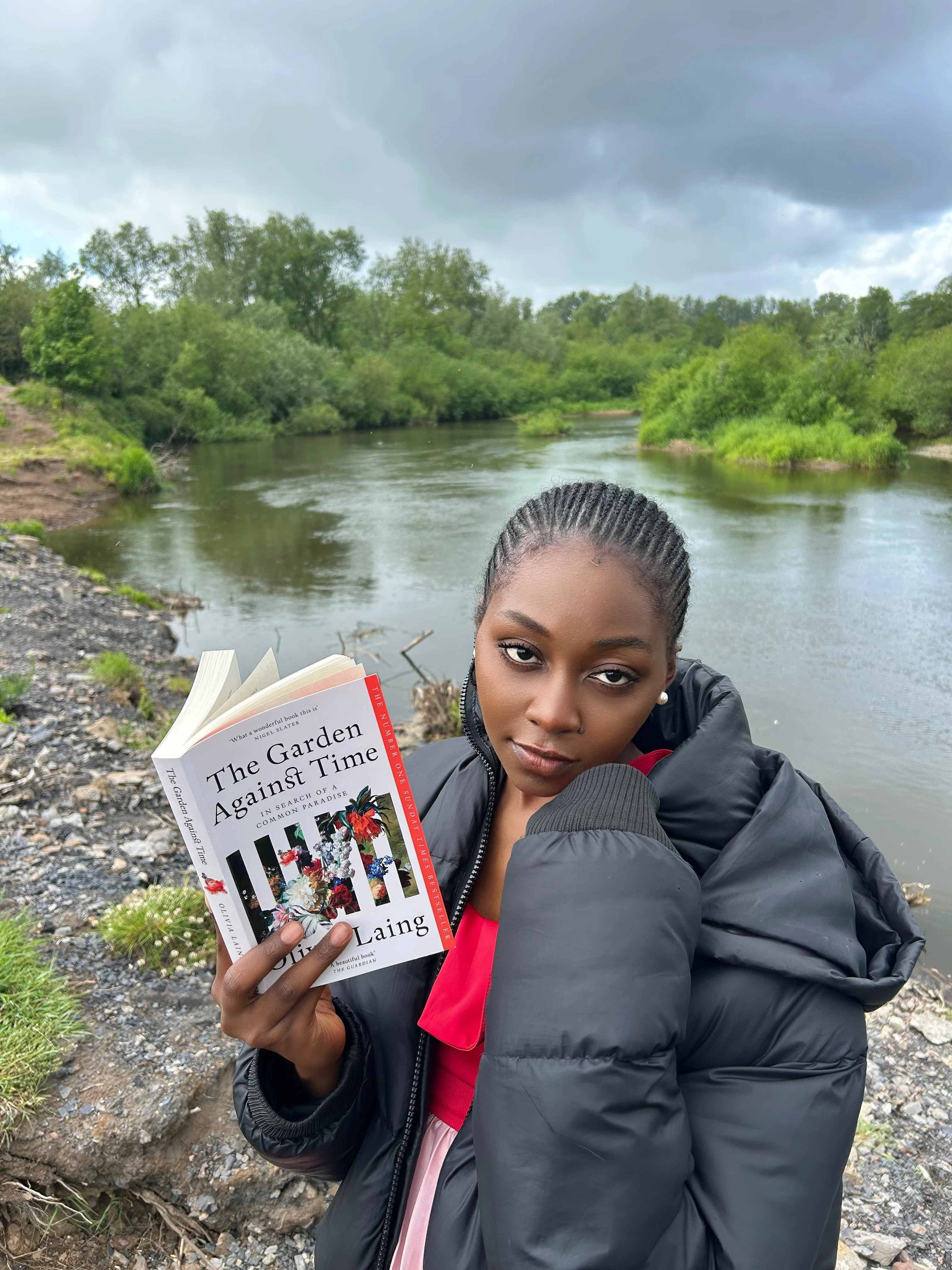
Oh my goodness, you guys! I just had to sit down and gush about the latest book that's completely captivated me. I mean, you know me, I've got a pile of books probably taller than I am, lol just kidding, but every now and then, one just hits different. And that's exactly what "The Garden Against Time" by Olivia Laing did.
Finding My Reading Nook: A Little Bit of Barons Haugh Magic
So, before I even dive into the book, let me set the scene. I took this beauty with me to Barons Haugh Nature Reserve to do some reading in nature – honestly, there's nothing quite like it. It's such a peaceful spot, perfect for getting lost in a good book. I actually took some photos there (you might have seen a sneak peek on my Instagram), and while it's gorgeous, I won't be sharing too much about Barons Haugh just yet. We didn't get to explore it quite the way I wanted to this time, so we're definitely planning a proper return trip. For those of you familiar with the area, think of it as another lovely spot, a bit similar to the feel of Lochwinnoch but with its own unique charm. It was the absolute ideal backdrop for this particular read.
"The Garden Against Time": More Than Just a Book About GardensNow, onto the main event: Olivia Laing's "The Garden Against Time." Guys, if you're expecting a cozy guide to planting petunias, you're in for a surprise. This book is so much more than that. It's truly a masterpiece of non-fiction, blending so many genres that it feels like a whole new literary experience.
Olivia Laing, the writer, is just brilliant. She has this incredible way of weaving together her own deeply personal experiences – in this case, the very physical, sometimes grueling, work of restoring an overgrown walled garden in Suffolk – with vast stretches of cultural history, literary criticism, and nature writing. It's like she pulls a thread from her own life and it unravels into centuries of human thought and emotion.
What she really digs into is this idea of gardens as a kind of paradise. We all have that image, right? A perfect, serene escape. But what Laing does, so intelligently and unflinchingly, is she peels back the layers to show the hidden costs of creating these beautiful spaces. She doesn't shy away from the darker side of history – the links to power, privilege, even exploitation. She makes you really think about how many of these idyllic visions were built on the enclosure of common lands or even colonial legacies. It's a challenging, necessary conversation to have, and it completely shifted my perspective.
But here's the thing: it's not all doom and gloom. Even amidst these profound critiques, Laing manages to find so much hope and even radical possibility within gardens. She highlights figures and places where gardens became sites of incredible creativity, resilience, and even a kind of defiance against conventional norms. She shows us how working with the land, understanding its cycles, can be a way to connect with something much bigger than ourselves – to grapple with time itself.
Reading this book felt like having the smartest, most insightful friend gisting you about the world, history, and humanity, all through the lens of something as seemingly simple as a garden. It’s beautifully written, thought-provoking, and utterly absorbing.
If you love books that make you see the world differently, that blend the personal with the profound, and that aren't afraid to ask big questions, then you absolutely must add "The Garden Against Time" to your TBR pile. It's a genuine journey, and one I highly recommend you embark on.
Go grab a copy, maybe find your own quiet spot in nature, and let me know what you think!


Will AI take people’s jobs? Yes, it already has. It has taken some jobs in delivery companies and in large platforms like eBay, Amazon, and others. Will these business owners find ways to cut costs further? Yes, they will do anything, anything to reduce the need to pay humans.
But one question remains: can AI take all jobs? The answer is no. No, because not everything can be replaced or fully automated in one way or another. There are jobs that humans cannot be replaced in, especially those that require judgment, creativity, adaptability, and human understanding.
The companies and systems already in place show this shift clearly, and they also reveal something deeper when you look closely at what is happening over time. As automation grows, it is not only about replacing tasks but also about reshaping how people live, earn, and survive. It becomes a question not just of technology, but of daily life, food, stability, and dignity.
Do you know one area where AI is already making strong progress? Customer service. In many cases, chat systems and automated assistants are already replacing human workers. Military development is also changing, with countries building AI-powered systems that can operate without direct human presence. This may be just the beginning, or at least an eye-opener.
The world is moving quickly in directions that are not always positive. Have you ever thought about what the world would become if most jobs were taken by AI? Let me describe what comes to mind, something many business owners may not fully consider or even want to imagine.
In that world, people would wake up with nowhere to go. No shift to start, no call to respond to, no wages at the end of the week. Entire households could be without income. In some places, food would become uncertain, not because it does not exist, but because people no longer have money to access it. You would see long days stretching into empty routines, where the question is not work anymore but survival.
As this continues, the pressure on daily life will grow heavier. Cheap Drug addiction would likely increase, not as comfort but as escape. When people lose work, structure, and direction, some turn to substances to numb hopelessness, hunger, and uncertainty. What begins as coping can quickly become dependency, spreading through communities already under strain.

Let me take you on the journey I experienced reading it. Imagine it’s a quiet Friday morning, sunlight spilling through the window, a steaming cup of tea beside me, and the pages of The Great Alone calling my name. I couldn’t wait to read this book, and I can promise you, you won’t either.
Kristin Hannah, for those who might not know, is a global bestselling phenomenon. She has an unparalleled gift for capturing human emotion, painting settings so vividly that you feel as if you’re walking alongside her characters, experiencing their fears, their joys, and their heartbreaks firsthand. And in The Great Alone, she does just that, turning the rugged Alaskan wilderness into more than just a backdrop; it becomes a character in its own right.
This novel is an exquisite blend of historical fiction and contemporary drama, with hints of romance and suspense woven throughout. It’s the kind of book that would translate beautifully to the screen, picture sweeping landscapes, the raw, biting cold of Alaska, and a story that grips you until the very last page. While it hasn’t won every major literary award (though I wouldn’t be surprised if it did), it has earned a place in readers’ hearts worldwide.
From the moment I saw the cover, I was drawn in. The muted tones, the hint of vast wilderness, the lone figure in the distance. It perfectly mirrors the themes of isolation, survival, and resilience. Published by St. Martin’s Press, the book exudes quality, and the very feel of it in your hands tells you that you are holding something special.
Oh, the characters. Each one is written with such care, it’s impossible not to feel for them. My personal favorite? Leni Allbright, the young girl whose coming-of-age story runs through the heart of the novel. I admired her courage and her vulnerability, qualities that made me reflect on my own adolescence. And then there’s her father, Ernt Allbright, whose flaws and struggles are both terrifying and heartbreaking. I found myself asking, “If I were in Leni’s shoes, what would I have done?” Honestly, I’m not sure I would have had her bravery.

1) Consider Becoming a Trainer
If you want to share your knowledge with the world in a more formal way, consider becoming a trainer. Trainer roles can vary widely, but often involve teaching new skills to others or helping employees learn about their company's policies and procedures. Trainer roles can be a great way to share your knowledge with others in a way that is structured and organized. You can either become a part of a training organization or set up your own training business. If you're interested in becoming a trainer, there may be programs specifically for trainers, or you may be able to find courses that will help you develop the skills you need. Additionally, it's important to build your own personal training portfolio. This can include examples of the work you've done, testimonials from past clients, and any other relevant information. By creating a strong training portfolio, you'll be able to show potential employers that you're qualified for the job.

When I started reading Chris Guillebeau's book on time anxiety, a powerful realization hit me: I was completely guilty of it. With each page, it felt as though the writer was speaking directly to my soul.
For years, I avoided celebrating my birthday. I'd ask myself, "What have I even achieved?" Is it truly worth celebrating?" I'd go silent, and if someone wished me a happy birthday, I'd feel nervous and anxious all day. Most of my friends didn't even know when my birthday was, and while those who did always wished me well, they never understood the deep questions it triggered within me.
I come from a family where everything I needed was provided. My dad was one of the best graduating students of his time, with many awards. Whenever I looked at him, I exuded such confidence ; he knew his field inside out, understood himself, and could speak eloquently about his journey. He has a loving family, of which I am a part. My dad always encouraged us but never pushed us beyond our limits. Yet, time anxiety never lets me truly enjoy the process of life.
I started working really early, driven by my own desire. My dad initially didn't approve, but he quietly watched me teach students math and English. Right after secondary school, I began teaching at a primary school. There was one girl who struggled with speaking, and her aunt wanted me to tutor her so she could attend school, as English was the language of instruction. I felt confident I could teach her, and you know what? She learned English and today she speaks it well. But I noticed that with every achievement, I immediately asked myself, "What next?" This constant focus on the future prevented me from enjoying the present process.
I graduated with a degree in General Medicine, but while I was studying, I also worked as a model and blogger, sold shoes, and collaborated with agencies to help international students travel. I wasn't lacking anything; my dad made sure I had all I needed. But I never rested. Some might say I was just hardworking, not letting my comfortable family background make me complacent. But knowing what I know now, I wouldn't have done it without truly enjoying the process. I was so fixed on the result that I missed out on the journey. I always had something to do, always a goal; there was no time to relax. I can't recall a single time in Ukraine when I went out to simply chill without feeling guilty that I could be doing something more "productive" than resting. It took me a long time to understand that resting is a crucial part of the process. So I kept racing.